Background Info My main water supply on my home is located on the east wall of the home, whereas my garage is located on the west side of the home. There is no water softener loop in the home, and in Arizona most water softeners are put in the garage on newer homes. I would like to put in a water softener but I'm uncertain that I should re-plumb my water into the garage and back to the east wall into the house.
The way I see it I have two options:. Plumb from the mains on the east wall, under the landscaping and into the east wall of the garage. Then into the softener and out, under the landscaping into the east wall of the house.
Place the water softener behind the east backyard fence (outside), and plumb the east wall main through the fence and into the water softener. Then water softener to the east wall of the house. My questions are:. What is: more cost effective and/or more logical to do?.
What type of pipe should I use under ground, given we are located in Arizona. Taking Arizona weather into account (Phoenix/Mesa area) if I chose #2 and placed the softener outside, what weather concerns should I know of: freezing, extreme heat, etc.?. Is there a specific type of softener I should look for?. Given Option #1 is the right choice, do I need to worry about line pressure drop going that far of a distance and back?
Approx 15-20ft each way (total of 30-40ft). Pictures of the home This is a crude drawing of option #1.
This is the location of the water main, as you can see its on the east wall in front of the backyard fence. Okay I will try my best on this one. Living in an arid climate does create quite the change in temperature, do you ever get below freezing there? Code up here is at least 18' underground and sleeved if the water line is not approved for underground. I would suggest PVC sch80 pipe as I believe that is approved.
The pressure loss is also minimal for the length of pipe in PVC but the number of elbows you are proposing, which I am counting 9 is a total friction loss of about 38 feet of head which is 16 psi. Now I am not saying you'll loose that much off the piping but the calculation suggest it. That is the garage application. Now on average from a water softener you will also lose about 5 psi. I understand the aesthetics your house is important, but I would keep it outside behind the fence if you guys down there have weather that doesn't go below freezing.
If you do I would box it and put heat trace on the softener and lines. I hope this helps.
If it were me, I would definitely put the softener in the garage. Protecting it from weather, critters, and extreme temperature variation seem reason enough. But to also have it where you can easily monitor it daily seems reason enough again to locate it in the garage. But the water meter looks like it is above ground: Maybe the climate is safe against freezing? I am under the impression that all of Arizona is desert climate, which means below freezing temperatures are possible overnight most days of the year. You only need to run one pipe from the water meter to the softener. From inside the garage, you should be able to connect into the system more directly than going back to the meter.
In fact, would the water heater be in there too? (I don't see an exhaust for one maybe because there is not enough resolution in the photos.) If it is, you can put a T fitting onto the cold feed into the water heater and distribute softened water from there. The end near the water meter. As for digging and burying in the front yard or running it under the house, I would expect running under the house is easier and cheaper. Does it have a crawlspace?
I live in Phoenix and have a Kinetico water softener in my back yard. It is in a small shed that keeps it out of the sun. The advantage with a Kinetico is that it takes no power. The heat and cold do not bother it. It does get a bit dusty and I occasionally just hose it down.
It does cost more, but in my case putting the softener in my garage was not an option so it seemed worth the extra expense. In your case you could consider installing one just behind your fence, a few feet back from the water main. PVC is used underground a lot in my neighborhood (Cold water only, CPVC is rated for hot water).
Installing A Water Softener With A Loop Machine
Copper is usually used above ground, for the resistance to sunlight I suppose. If you put the softener behind the fence, your run would be short enough that I would probably use copper for the whole loop.
My 8-yr-old tract house (slab foundation) did not have a 'loop' installed for a water softener. My neighbor's house (same floor plan as mine) has a line in the garage into which he installed his softener, and a pre-installed drain line. I have neither of these.
The inlet/outlet lines to my water heater are in the garage but that's it. I just replaced all the shutoff valves and lines under my kitchen sink and was amazed by the amount of gunk in them. The water here in Phoenix is known to be very hard - the city says the water in my part of town has a hardness of 230ppm (13.5 gpg). When I replace my water heater (probably will have to sometime in the next year or two?), that would seem to be a good time to add a softener. How much work is it to retrofit a softener into a house that wasn't set up for one? As far as I know, the cold water line feeding the house is under the slab and therefore inaccessible.
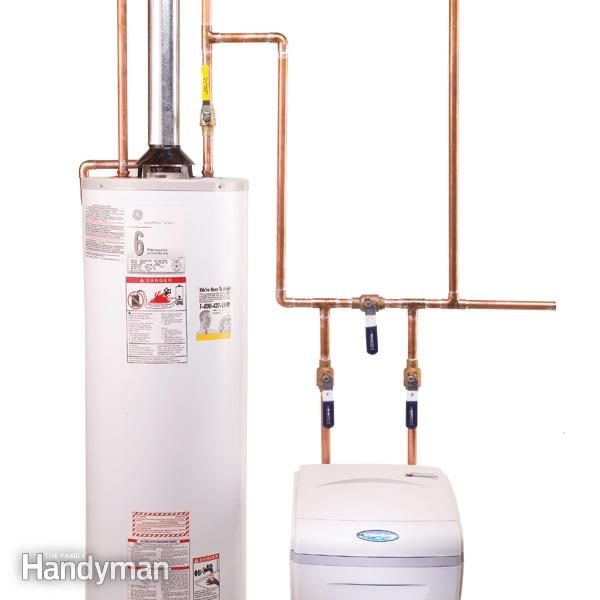
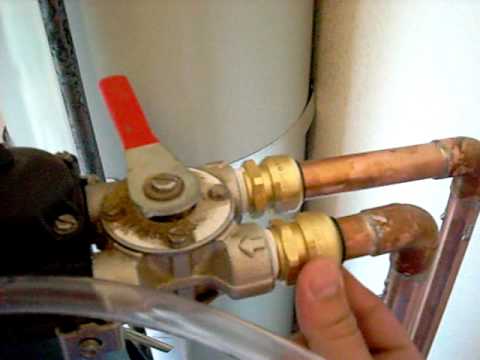
Even if I could get to it, I probably don't have separate dedicated lines for the kitchen sink (drinking water) and the backyard hose bib, to keep them on the hard water. I suppose I could soften the hot water only. If I did that, getting power and a drain line to the softener would still be a concern.
Thanks for any advice. Knut nystedt o crux pdf to word download. Subject: Installing water softener- house not pre-plumbed Author: Melman Date: 12/2/01 3:27 PM Number: 17128 My 8-yr-old tract house (slab foundation) did not have a 'loop' installed for a water softener. How much work is it to retrofit a softener into a house that wasn't set up for one? As far as I know, the cold water line feeding the house is under the slab and therefore inaccessible.
Even if I could get to it, I probably don't have separate dedicated lines for the kitchen sink (drinking water) and the backyard hose bib, to keep them on the hard water. I suppose I could soften the hot water only. If I did that, getting power and a drain line to the softener would still be a concern. You have a few options depending on how your home is situated with respect to the incoming water service line. If the service line enters your house in an inconspicuous location you could cut into the line outside the exterior wall and install a riser loop to access your softener which you could set outside as well with suitable weather protection as/if needed.
Installing A Water Softener System
You would have to run electrical service to that point as well unless you buy a softener that uses the energy of the flowing water to drive the topworks. If the service line is close to the garage (that being where you want to set the softener) you could again cut into the line and run your buried softener loop along the exterior wall, set a short riser, and drill through the exterior wall into the garage at floor level. Our situation is different. We have a private well and installed a Kinetico softener at the well. The resin tanks are half buried in the ground to reduce the visual profile.
The softener doesn't require electrical power to operate. The main drawback is that the entire house and outbuildings have treated water service. We're planning to run a raw water line around the perimeter of the house to supply additional hose bibs.