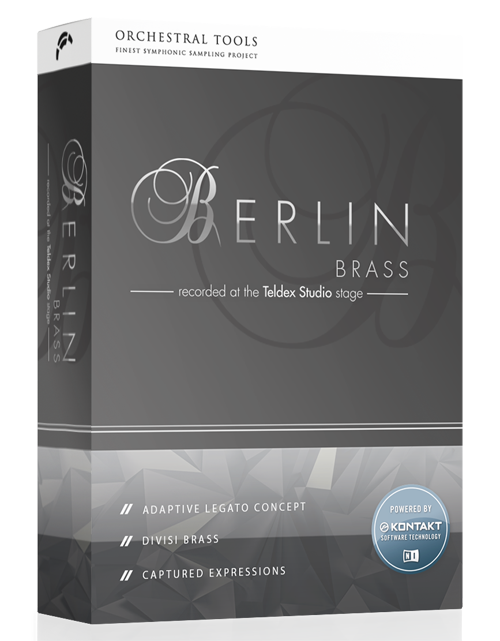
Hey Everyone!! I've just uploaded and published my review for Berlin Brass. At the beginning of this video, I briefly explain some of my performance limitations with this library.
Keep in mind, I use a modest system with 32gb of RAM. With that said, I failed to make my point that, due to the size and content of this library, it's my opinion that there should have been a mixed microphone setting. As always, I hope you find this review useful as the final days of the pre-sale pricing are upon us. Thanks for watching and take care. I've made some amendments to the video with annotations to clarify any word usage that may have been confusing or inaccurate. Note 1: Load Times: In the review, I mentioned that I was working with all the multi and legato patches loaded due to the time it takes to load.
This comment wasn't directed at Berlin Brass but rather the actual time it would have taken to individually load each patch during the review. Likewise, loading patches in Kontakt while screen casting causes audio glitches and drops. So, I sought to avoid this. The load times in Berlin Brass, when batch re-saved are minuscule.
Note 2: Ram Usage. As specified earlier in this thread. The issue of how much ram Kontakt was using was exclusive during the recording of my review. I've since re-tested the same setup and Kontakt only uses 8 gb when loading all multi and legato patches while having all samples purged. Note 3: Sample loading issues when trying to playback, especially the tempo lock repetitions. This is not a bug in Berlin Brass but a side-effect of trying to playback tempo locked samples that are purged. Any library will do this, even if you are running on a Solid State drive, as I was with this library.
Note 4: There was no issue with the Tuba Legato patch. I accidentally selected Midi Ch. B1 instead of A1 and just didn't catch it.
If you stopped watching the video there, I go back and load it up again and it works as advertised. Click to expand.Depends on your system to be honest. Spitfire is certainly more usable for me at the moment and I find the sound great.
However, Berlin Brass has a sound that is more clear to me which certainly gives me more flexibility in the end. Berlin Brass has more capabilities to build different ensembles in very logical way that is pretty awesome where as Spitfire only has the 1 soloist per section compared to having each player available in Berlin Brass. If I had to choose between the two I'd go for Spitfire Brass. It has more instruments available (Cimbassi, Contrabass Trombone, etc) not to mention there are more articulations like Mutes, Falls, and Rips.
Also, the price is certainly more affordable. Basically nearly $875 vs. Berlin Brass feels like it was sampled more deeply, ie; more dynamics and round robins so the price is justifiable but others may disagree. I hope my thoughts are helpful, I know the Brass options available right now are difficult to choose from. I'm fortunate enough to receive these products for free but I also try to be as fair and transparent when I review them.
Berlin Brass is a great library but it's not without its downsides which the biggest being system performance issues, especially RAM usage. I wouldn't be so negative about it but it was the fact that the scripting and ram usage without any samples loaded was making my single standalone instance of Kontakt use up around 12 gb which tells me that Orchestral Tools really needs to work on CAPSULE some more and make it more efficient. I had the same exact setup used in my review of Spitfire's Brass which used up 7gb of RAM total, and that was with one mic loaded for each so they weren't even purged like I had to do with Berlin Brass. Anyway, I've babbled on long enough. Maybe if VisionDAW wants me to review one of their builds, I would be able to run Berlin Brass and I could look past that. Until I have a few thousand to spend on a new system, I'm stuck with the build I did 5 years ago.
I've maxed it out as much as I've could and I am still able to run the mass majority of libraries being released. Click to expand.Nope, that was with everything purged from my instance that I used in the review. I show the Engine Memory page that said nearly 5gb was being used of 'object memory' which is everything but samples.
However, the actual instance of Kontakt, via the task manager, was using approximately 12 gb of memory without any samples loaded. Edit: Since the review, I've loaded up the same configuration and the Kontakt instance was using just over 8gb instead of 12.
I don't know what the discrepancy was between then and now. Click to expand.I would get both! They both have very different sounds and are useful in different applications. Berlin Brass has a clearer and tighter sound thanks to Teldex, as well as the most wonderful ability to build your own sections. Every articulation is consistent, and the shorts sound fantastic. Spitfire has more instruments though pretty inconsistent articulations. You can also have larger unison-sampled (6 horns, 6 trumpets, etc.) section sizes; however you don't have multiple different solo instruments to build your own section with, only a single solo.
AIR sounds great on some things and doesn't on others. The shorts aren't as good IMO, but there are some nice multi-tongued articulations which can help make up for it a bit in some cases.
Both have multiple mic positions, lovely tones, and enough articulations for most of your needs. If I had to pick one, I'd go with Berlin Brass simply because I LOVEEEEEE being able to write individual brass lines with different players. Like I said, though, both work well for their own uses. I do tend to lean towards BBR more, but I also just like having consistency in the room (I have a complete Teldex orchestra but only a partial AIR one). Regarding RAM, I have never had an issue whatsoever with either. On the other hand, I have 128GB RAM in my workstation, so I've NEVER actually had a RAM issue with a library. Note: I have received free products from Spitfire Audio and Orchestral Tools.
I usually make it a habit not to comment on Sample Talk threads, but since a number of users reached out, I will make an exception: We do not see the RAM usage Chris reports here and not a single user has complained about this. I have attached a screenshot of Kontakt with all Multis loaded fully purged (as Chris does in his video). As you can see it is 6.25 GB of Kontakt memory, not 12. It is true that the power of Capsule comes at the cost of some RAM, but not by far to the extent Chris is suggesting here. I think this is a glitch on Chris' system, which I was unaware of.
Orchestral Tools Berlin
I did not find any emails enquiring about this. I will investigate this and as our developers what could be causing this excessive RAM usage, but just wanted to let you know that this is something we have never seen and that of course it is NOT normal. I've emailed you in response to this thread and my issue. Just to be clear for everyone else on here. My setup and issue was not just with the Multis but also including the Legato patches as well. The numbers I've quoted were from my recording during the review. After setting up the same configuration, something has changed.
Instead of 12gb being used by kontakt, I am now at 8gb. This is way better but something is obviously wrong for the previous situation as noted in my review and this thread.
I do not go out of my way to spread false information so I hope others do not see this as such. Again, I've reached out to OT Support and hope to find a solution to what is hopefully just a problem for ME. I also hope any users out there can look into this as well and see if they are experiencing similar numbers as me so I don't feel like a crazy person anymore!! Anyway, as stated in my review and earlier, this was my biggest issue which hopefully is limited to me. If that is the case, than everything else stands. Berlin Brass sounds great, performs well, and offers an extensive list of articulations that are consistent for each instrument.
I find the comparison that SF brass is more complete and less expensive not really fair, to be honest! 1) Price: SF sold the individual BML brass modules for quite a lot more than they are offered now, so it is just another price policy. With OT you get a fixed price without any additional sales happening except for the intro offer. SF seems to bundle all their small volumes in big bundles, similar to how East West does it: early customers pay a lot more and often pay upgrade fees on top of that in order to get continued updates. Also, you only compared SF brass price without the mic expansions! Sure, some people will probably not need it, but it is not the full product, actually.
2) Content: Yes, Berlin Brass doesn't have Cimbassos and what not. It also does not have mutes, as those will be a dedicated expansion module. The SF mutes are included, but they are very sparse and can only be applied in some areas, where you might need mutes.
And you are completely missing to mention, that the existing articulation in Berlin Brass are quite a bit more complete than those of SF Brass. You did mention the fact that with Berlin Brass you get individual instruments vs one soloist with SF only. But this is not only a small gimmick! It means, you can actually write like for a true Brass ensemble, changing between unison and chords within phrases. This on itself is really a game changer to me!
I have both SF brass and Berlin Brass and I do see use for both of them! Don't get me wrong on this, I see both of them getting used depending on the needs.
But if one would ask me I had to choose one of them, without a second of thought I would choose Berlin Brass. It is way more versatile and you pay for what you get. I did receive free products from Orchestral tools, but the majority, I bought. So, there is no reason for me to praise OT. I just get the free libraries for doing demos. What I say here is only based on my experience as a customer and user of those libraries.
I find the comparison that SF brass is more complete and less expensive not really fair, to be honest! 1) Price: SF sold the individual BML brass modules for quite a lot more than they are offered now, so it is just another price policy. With OT you get a fixed price without any additional sales happening except for the intro offer. SF seems to bundle all their small volumes in big bundles, similar to how East West does it: early customers pay a lot more and often pay upgrade fees on top of that in order to get continued updates. Also, you only compared SF brass price without the mic expansions!
Orchestral Tools Berlin Brass Review
Sure, some people will probably not need it, but it is not the full product, actually. 2) Content: Yes, Berlin Brass doesn't have Cimbassos and what not. It also does not have mutes, as those will be a dedicated expansion module.
The SF mutes are included, but they are very sparse and can only be applied in some areas, where you might need mutes. And you are completely missing to mention, that the existing articulation in Berlin Brass are quite a bit more complete than those of SF Brass. You did mention the fact that with Berlin Brass you get individual instruments vs one soloist with SF only. But this is not only a small gimmick! It means, you can actually write like for a true Brass ensemble, changing between unison and chords within phrases. This on itself is really a game changer to me! I have both SF brass and Berlin Brass and I do see use for both of them!
Don't get me wrong on this, I see both of them getting used depending on the needs. But if one would ask me I had to choose one of them, without a second of thought I would choose Berlin Brass. It is way more versatile and you pay for what you get. I did receive free products from Orchestral tools, but the majority, I bought. So, there is no reason for me to praise OT. I just get the free libraries for doing demos. What I say here is only based on my experience as a customer and user of those libraries.
Click to expand.All great points, many of which I mention in my review. However, the question was asked to basically choose between the two in their current forms. Yes, SF Brass was more expensive once upon a time, but in that time it's matured and does offer more in terms of instrument compliments and extended articulations which will not be available in Berlin Brass until other expansions arrive. Also, it is by far lighter on system resources at the moment.
So, it might not be a 100% fair comparison in your opinion but people still see these two libraries as the main competitors in the brass market thus have to choose between the two when they can only afford one. I hate saying to buy both.
I got the damn libraries for free and that type of cop out degrades my credibility in my opinion. As a reviewer, I look at the now versus what it used to be and what it could be and weigh the two in the moment when I do comparisons. As single products, I seek to critique them on their own terms and what the developer's concept was to achieve. I made that case to the best of my ability and knowledge and gave Berlin Brass a very honest and fair review that I think gives this product a great rating, the same for SF Brass too.
Having used both libraries now, I stand by my comparison and descision if i had to choose between the two, RIGHT NOW. I mentioned the pros and cons of both and made a choice. Ask me again in 4 years when the prices and content change, I might have a different answer.
. Berlin Brass – Orchestral Tools – Kontakt Player Library €800 / €200 / €250 / €170 STRENGTHS: Includes an unprecedented amount of divisi options with sampled solo players. Covers a wide variety of articulations. Fantastic sound and legato scripting. WEAKNESSES: Very expensive. Requires more tweaking and micromanaging to make the most out of its features. Century Brass – 8Dio –.Requires full Kontakt $400 / $400 / $600 / $0 STRENGTHS: Boasts realistic legato scripting and fluid transitions between articulations. Great dynamic range with an impressive variety of instruments and articulations. You can try out the legato with their Freebie.
WEAKNESSES: To do standard brass writing, you will need both the solo and ensemble products. Highest dynamics on some patches have an interesting timbre. Spitfire Symphonic Brass – Spitfire Audio – Kontakt Player Library $690 / STRENGTHS: Gorgeous sound, includes a huge variety of articulations, instruments, and section sizes. WEAKNESSES: Sound isn’t particularly aggressive. OTHER: The expansion pack to this library can be purchased only after buying the main library and includes additional mic positions.
CineBrass – Cinesamples – Kontakt Player Library $400 / $400/ $150 / $830 STRENGTHS: It’s intuitive and playable. There are also a lot of mic positions available for you to experiment with. PRO packs a punch with options such as 12 Horns and Monster Low Brass. WEAKNESSES: There is no trombone ensemble legato included in CORE (but it’s on the way), and some have commented on the lesser quality of legato transitions on certain patches.
Hollywood Brass – EastWest – PLAY engine $130/ $270/ $400 (EastWest products are often on sale) STRENGTHS: Has a great, classic sound, and is also very comprehensive. A gem of the Hollywood Orchestra. WEAKNESSES: Resource hog, and a few bugs and inconsistencies. Running from an SSD is recommended to avoid any unnecessary inconveniences.
Bravura Scoring Brass – Impact Soundworks – Kontakt Player Library $250 / STRENGTHS: An extremely agile brass library with great sound, offered at a very generous price. It even includes often overlooked instruments such as a solo flugelhorn. An a la carte purchase option is available. WEAKNESSES: There is a slightly noticeable transition from one dynamic layer to another, and it feels like you should be able to push the dynamics louder than they actually go. OTHER: Bravura isn’t meant for over-the-top epic trailer music. It has a more traditional dynamic range and sound. Adventure Brass – Musical Sampling –.Requires full Kontakt $300 / STRENGTHS: A great-sounding collection with amazing agility and playability. Can craft very believable performances.
Perfectly suited to orchestral adventure music, as the title suggests. WEAKNESSES: The library is somewhat niche and not very comprehensive in terms of articulations and instrumentation. Symphony Series: Brass – Native Instruments – Kontakt Player Library $500 / $200 STRENGTHS: Includes a comprehensive set of articulations and has a powerful sound. Fantastic-looking interface offer lots of control over a variety of settings. Includes both solo and ensemble brass. WEAKNESSES: Unusually large section sizes – 8 instruments in each ensemble patch (including 4 euphoniums in low brass??).

This can cause some issues with realism especially when layering. Strezov Orchestra Brass – Stresov Sampling –.Requires full Kontakt $70 / $80 / $130 (The rest of the Strezov Orchestra series has been put on hold due to the destruction of its recording environment) STUB: Often cited as a gem overlooked by many.